02 — Product & Craft · Self-Directed Honours
01 — Brief
CANTI 001 was my final-year Honours project — the first large-scale piece I'd attempted and the first time I had to work through a full design-to-build process entirely on my own terms. The brief was self-directed: design and build a luxury table prototype suitable for sustainable batch production, using recycled plastic within a cradle-to-cradle framework.
The question wasn't whether recycled plastic could look good. It was whether it could look expensive.
The research made one thing clear early on — recycled plastic has a perception problem. It's treated as a material for budget products or novelty objects, never as something worth keeping. Pairing it with hardwood and finishing both to the same standard felt like the honest way to challenge that. The name comes from the cantilevered form the legs were originally sketched around — that idea shifted through prototyping, but the name stuck.
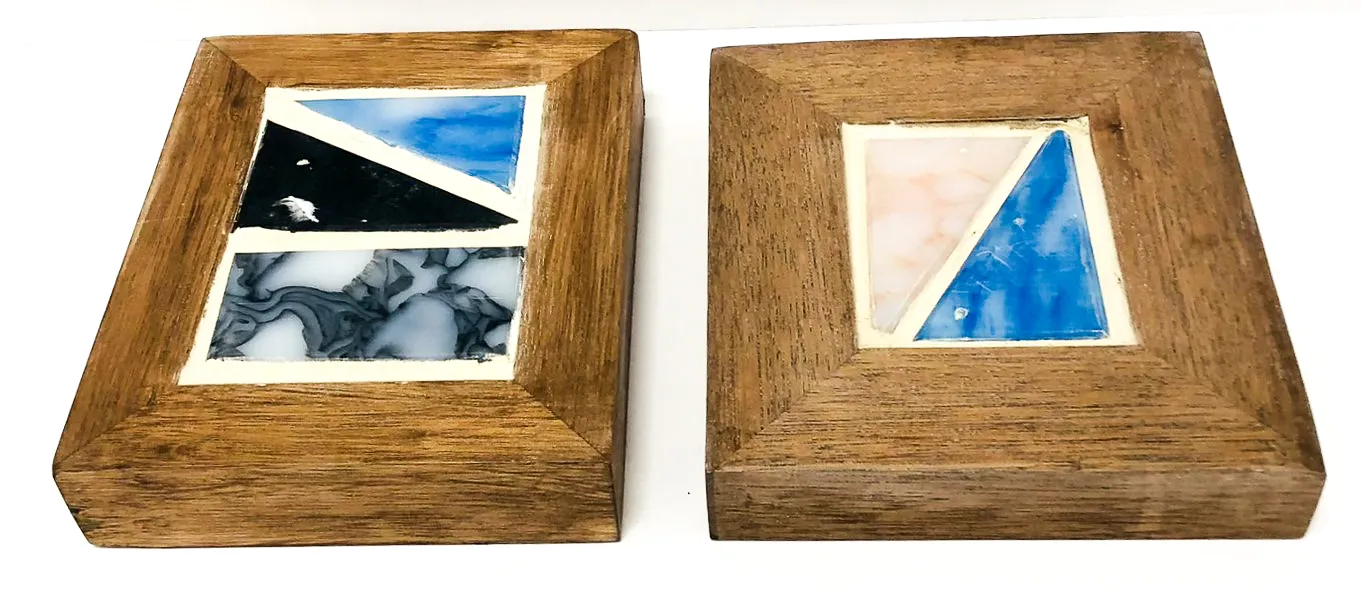
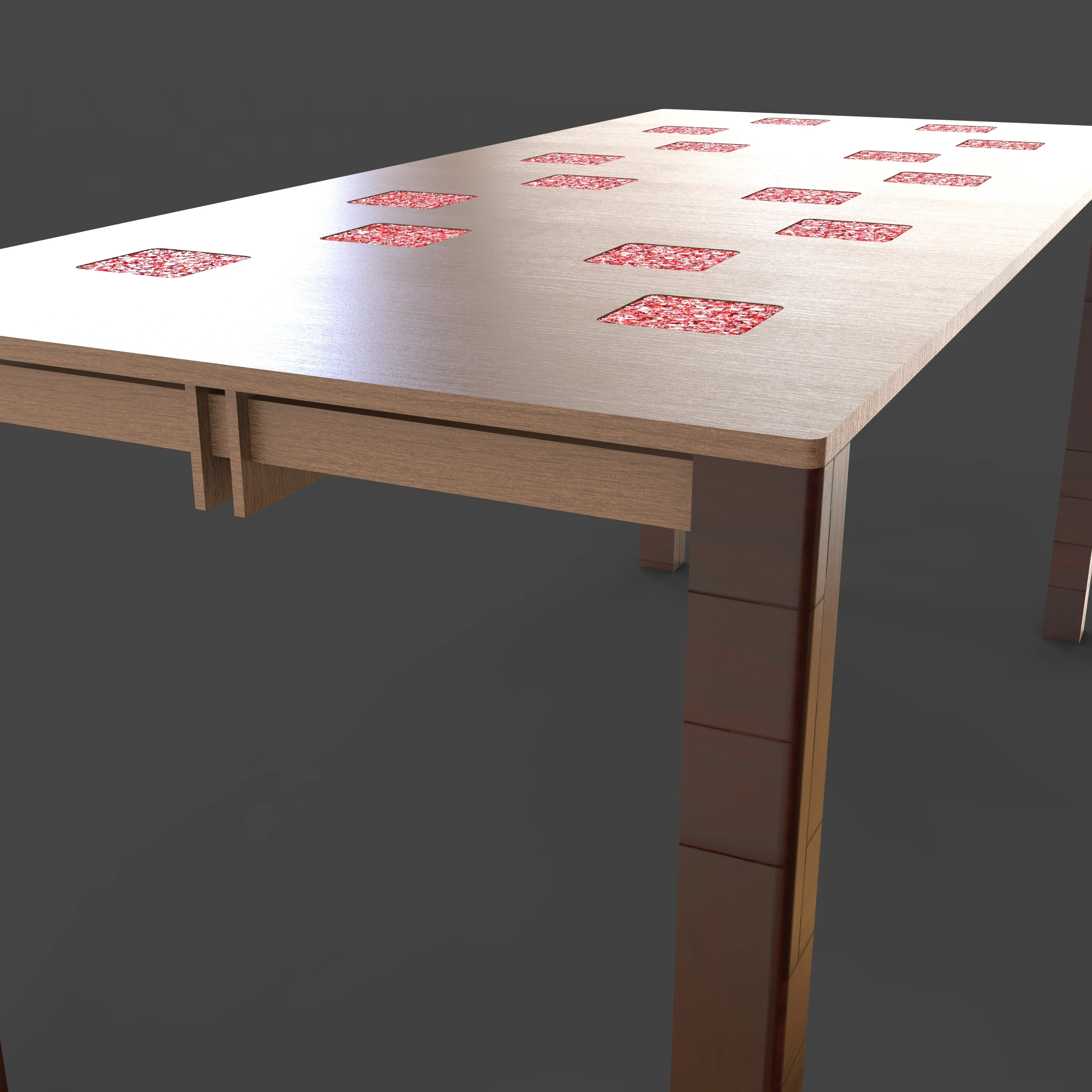
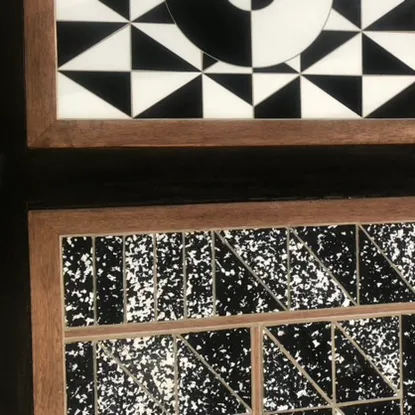
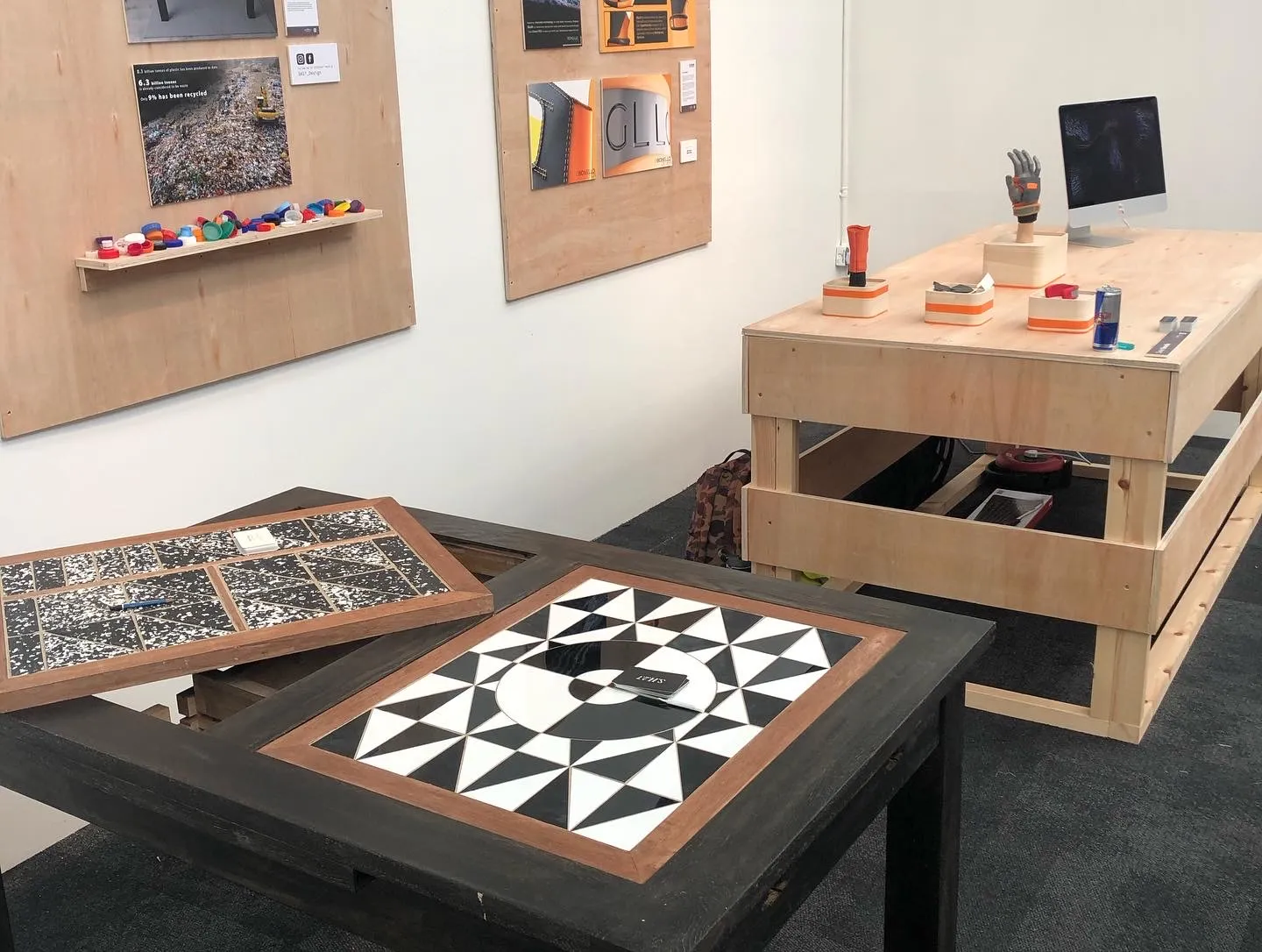
The end-of-life dimension mattered as much as the aesthetics. The mahogany panels and plastic inserts are fully removable and replaceable. When they're past their useful life, they go back — the business takes them and turns them into wall art. The oak frame stays, gets new panels. Nothing ends up in a skip.
02 — Material Research
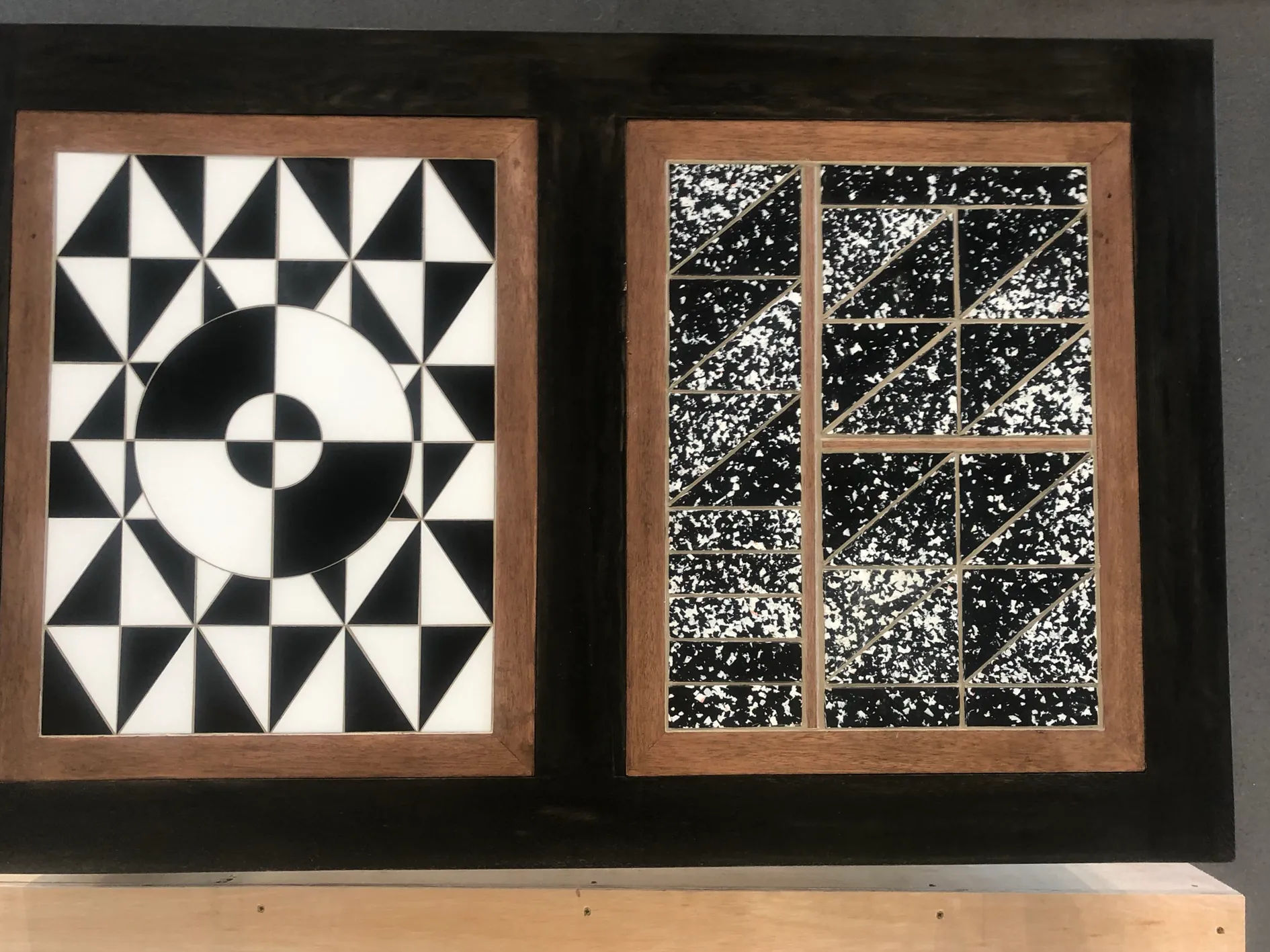
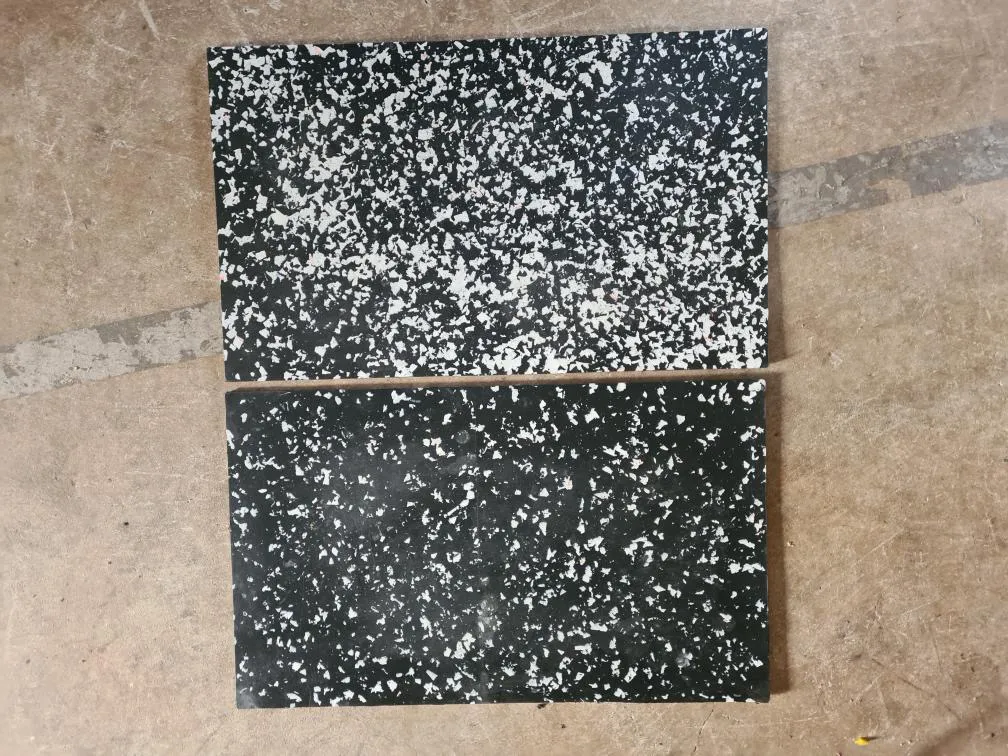
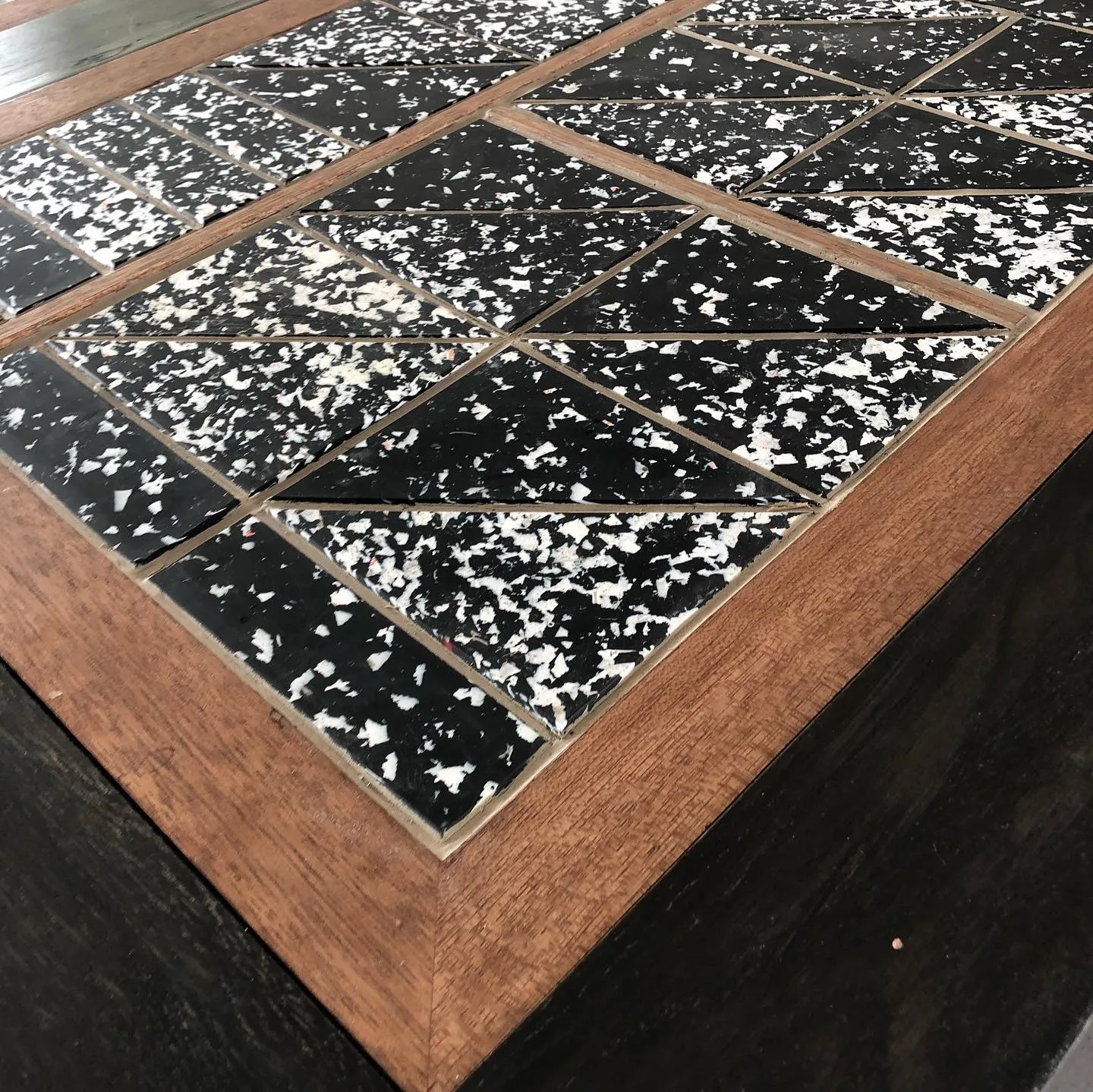
The plastic came from SMILE Plastics — sheets pressed from post-consumer waste, each one slightly different depending on what went into the batch. That variation became part of the point. No two tables would be identical, which is exactly what you'd expect from something sold as a premium, handmade piece.
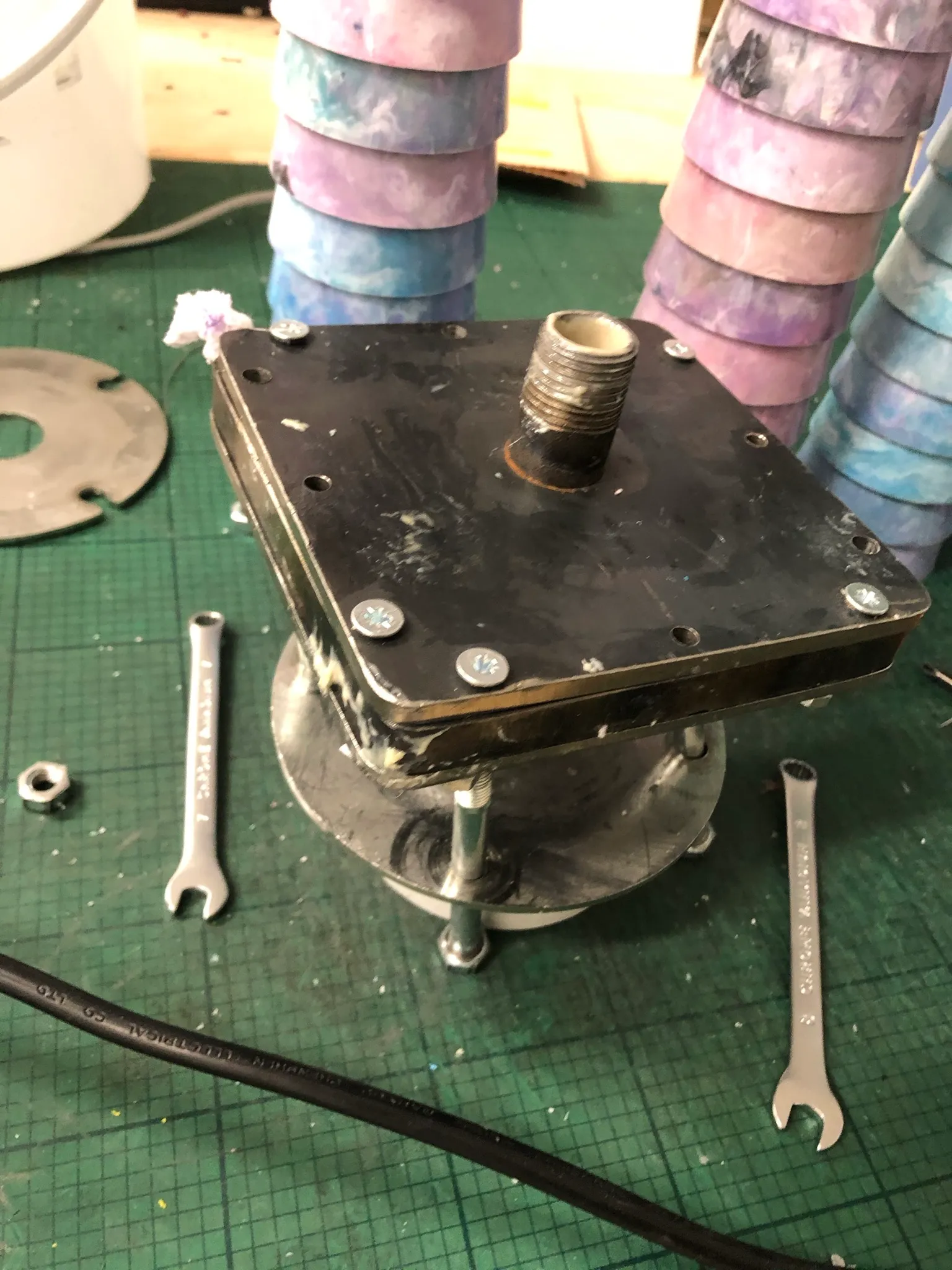
Getting the plastic to actually look the part took a lot of testing. The initial plan was to mould my own tiles using a custom mild steel mould I had engineered and built — but there was an incompatibility between the mould and Origin Plastics' injection machine, so that approach was shelved. Sourcing pre-cut sheets from SMILE turned out to be the right call. It meant I could focus on refinement rather than production.
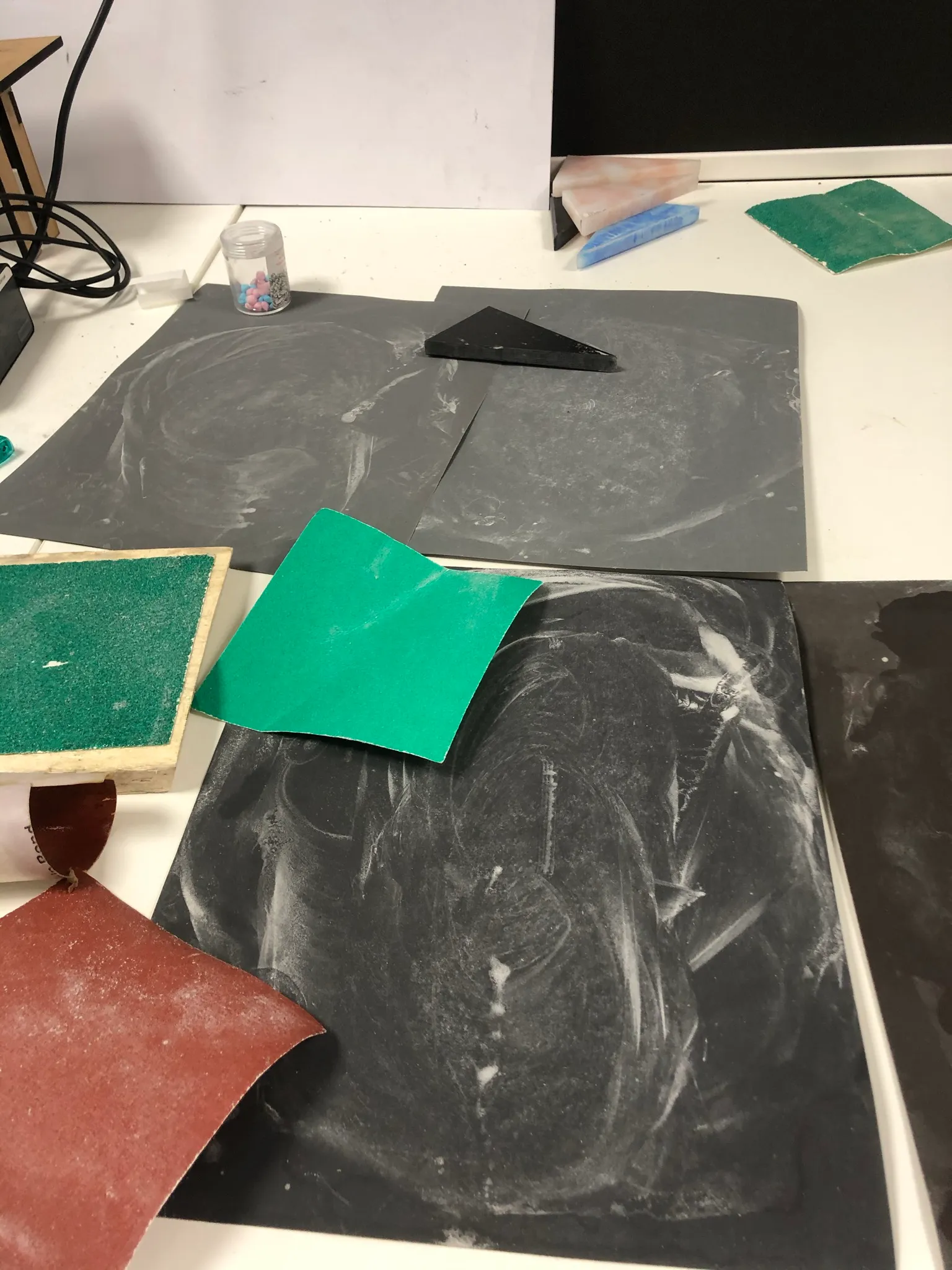
Wet sanded up to 2400 grit, then buffed and polished. The surface quality sells it.
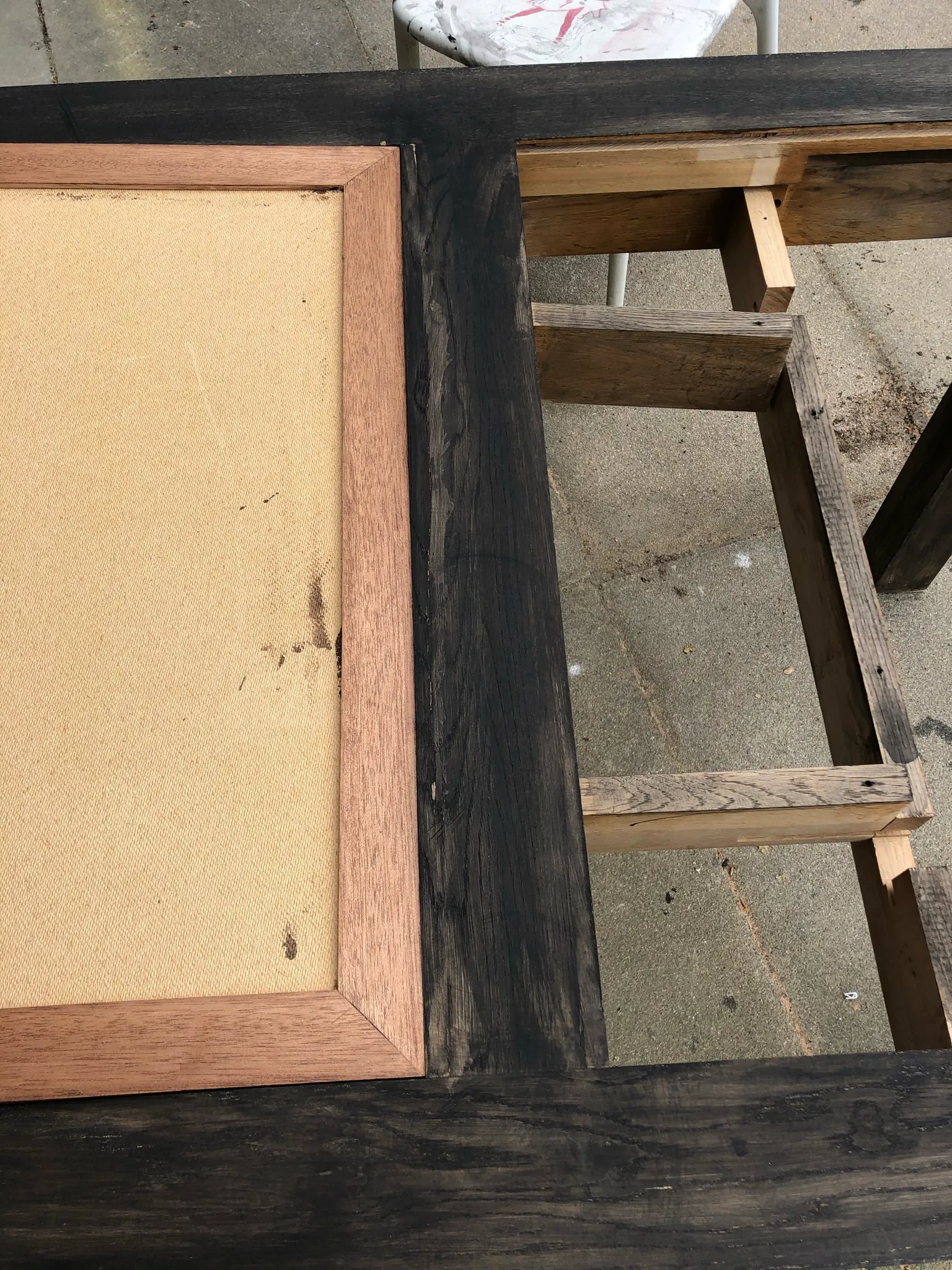
The mahogany panels were cut from a single plank with a mitre saw, then routed to create the grooves the plastic sits into. The contrast between the light oak frame and the darker mahogany does the framing work — it draws attention to the plastic rather than hiding it.
03 — Making
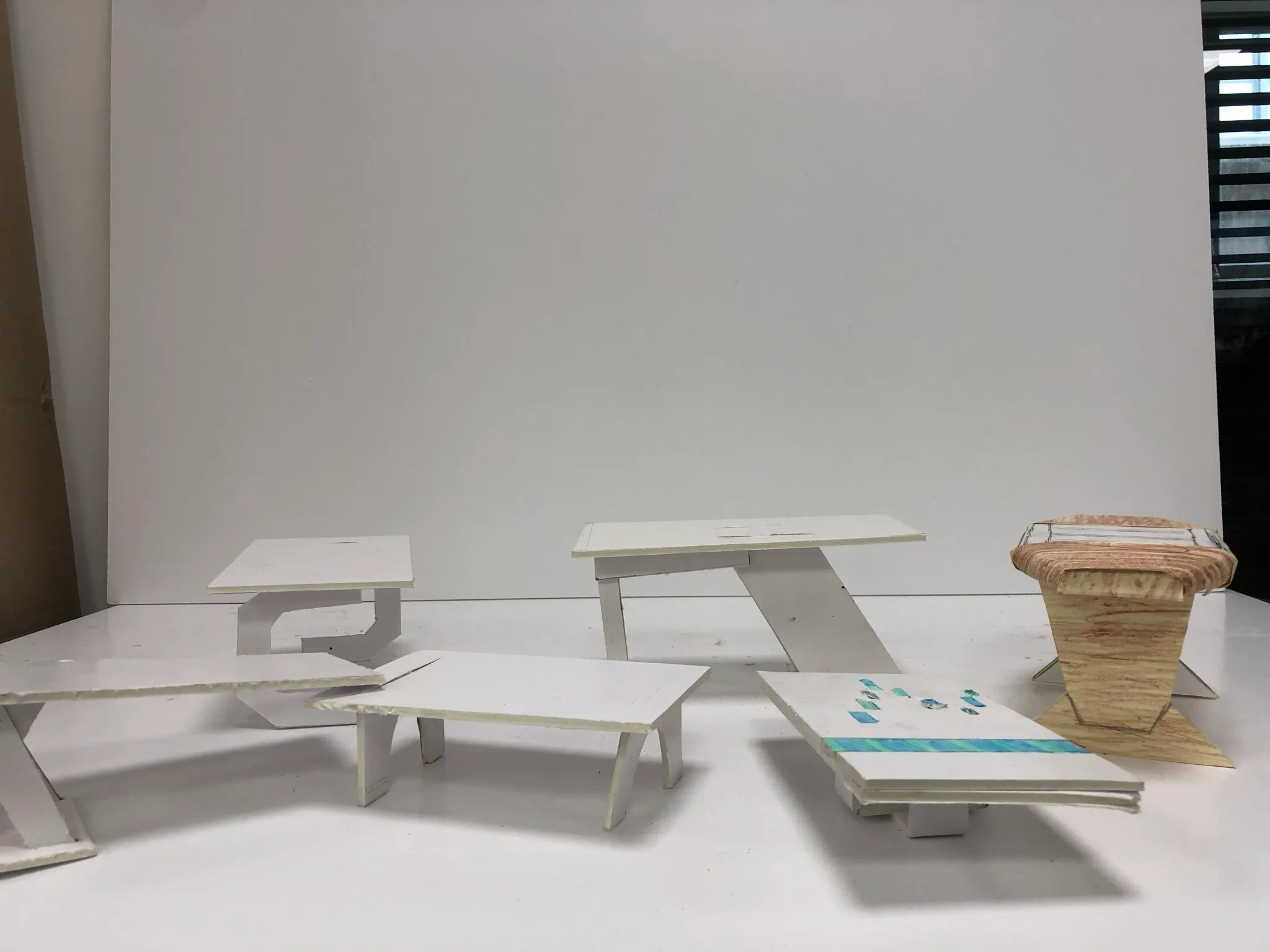
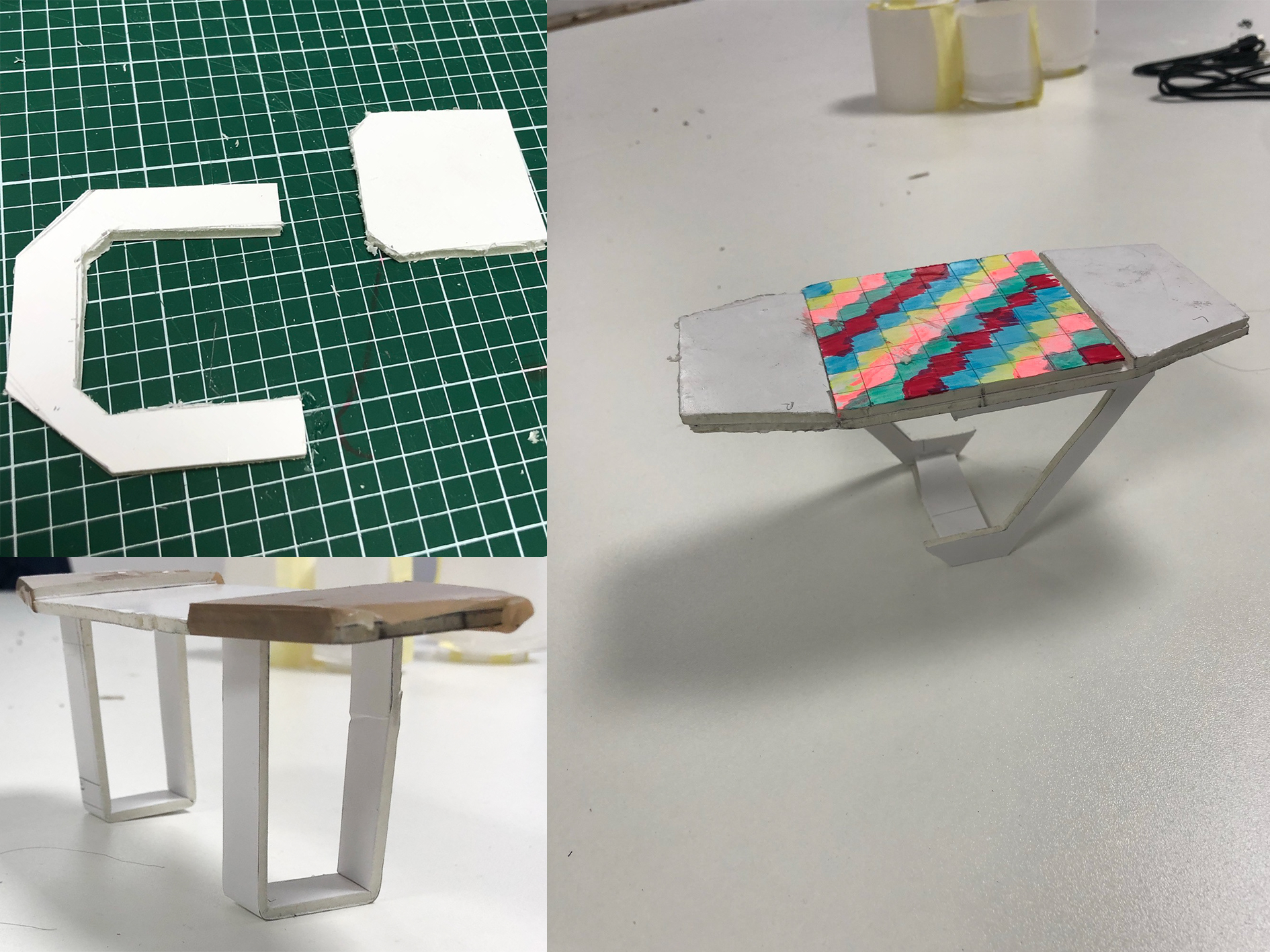
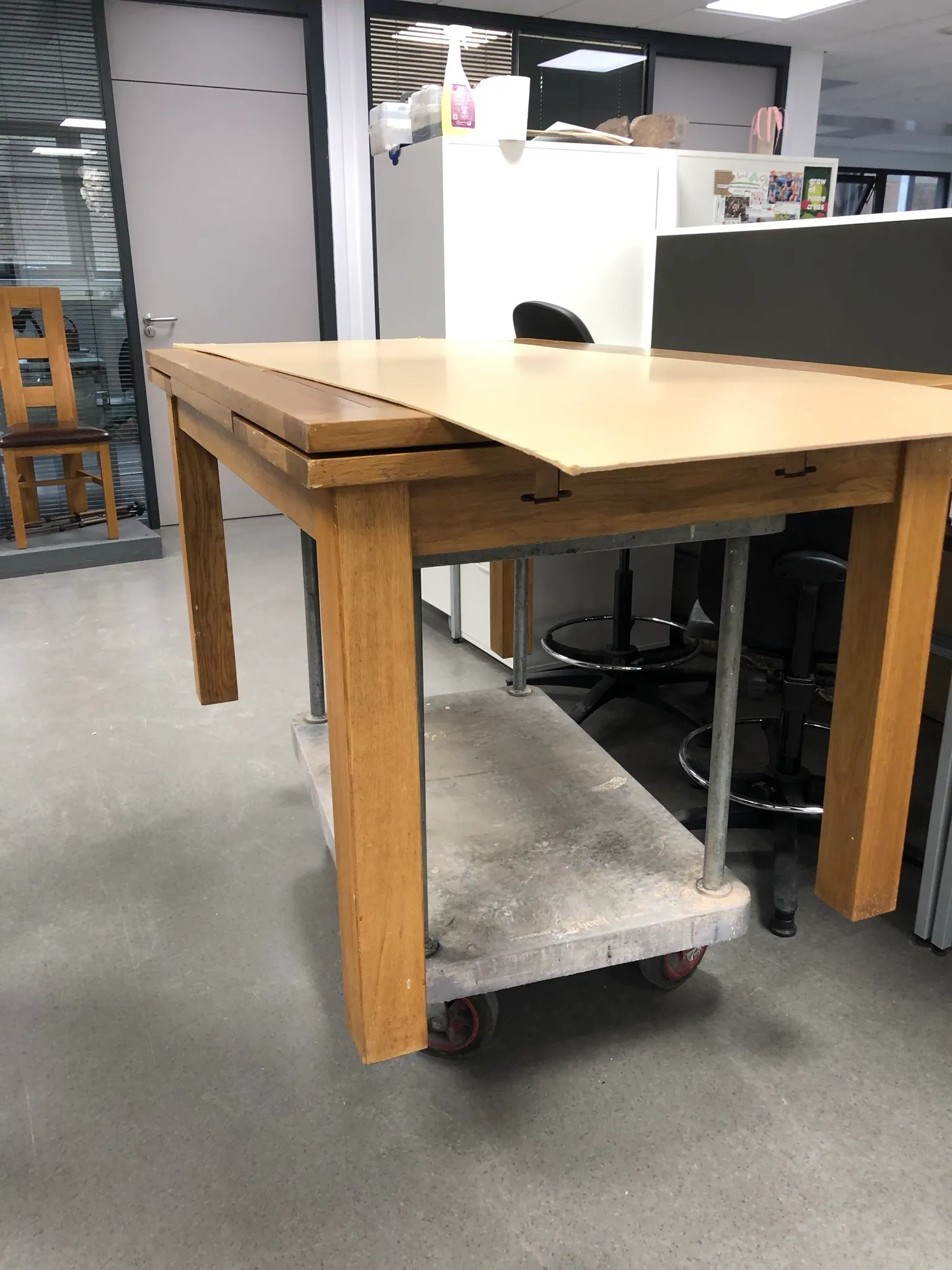
Foam board and card to iterate quickly through leg shapes and proportions. The cantilevered C-shape leg came from this stage. Cheap to test, quick to rule out — most ideas didn't make it past the first cut.
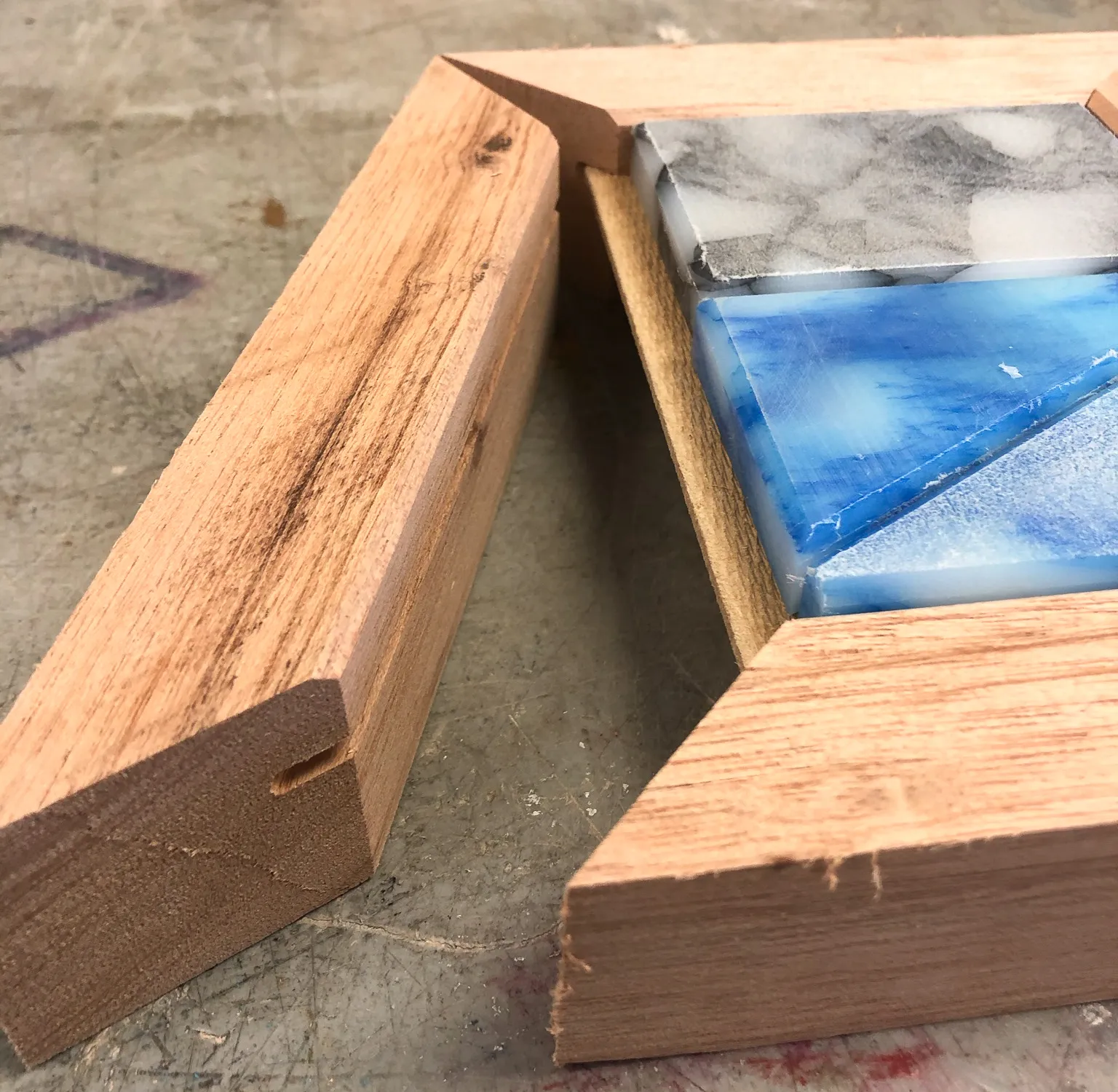
First structural prototypes used biscuit joinery for the C-shaped legs. The joins had almost no structural strength and reinforcing them would have increased production costs significantly while making disassembly at end-of-life near impossible. Ruled out early.
16 hours of sanding across the oak frame — four ascending grades with a palm sander, finished by hand. The plastic panels went through a separate process: wet sanded to 2400 grit, then buffed and polished on a buffing wheel to bring out the surface quality.
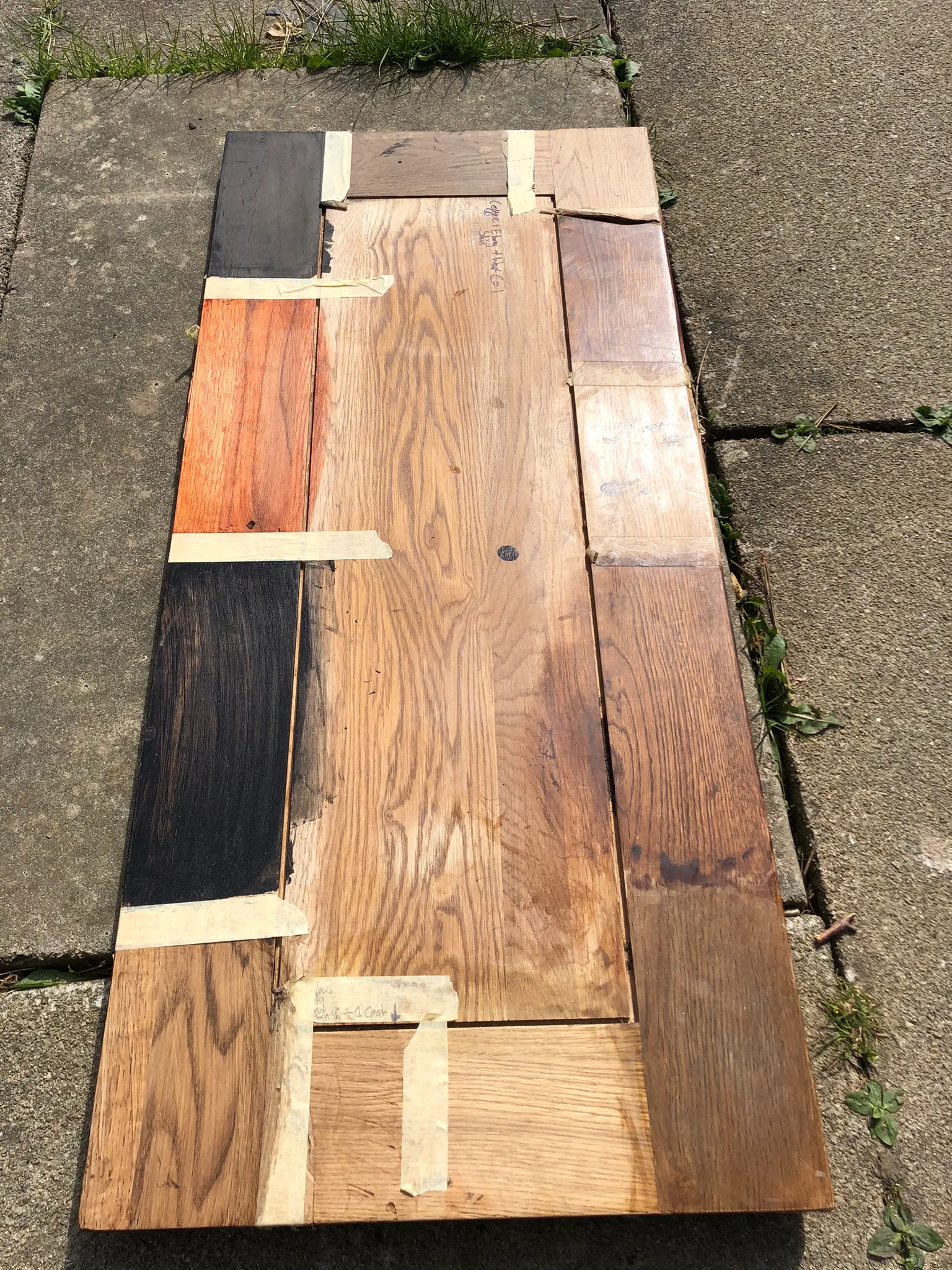
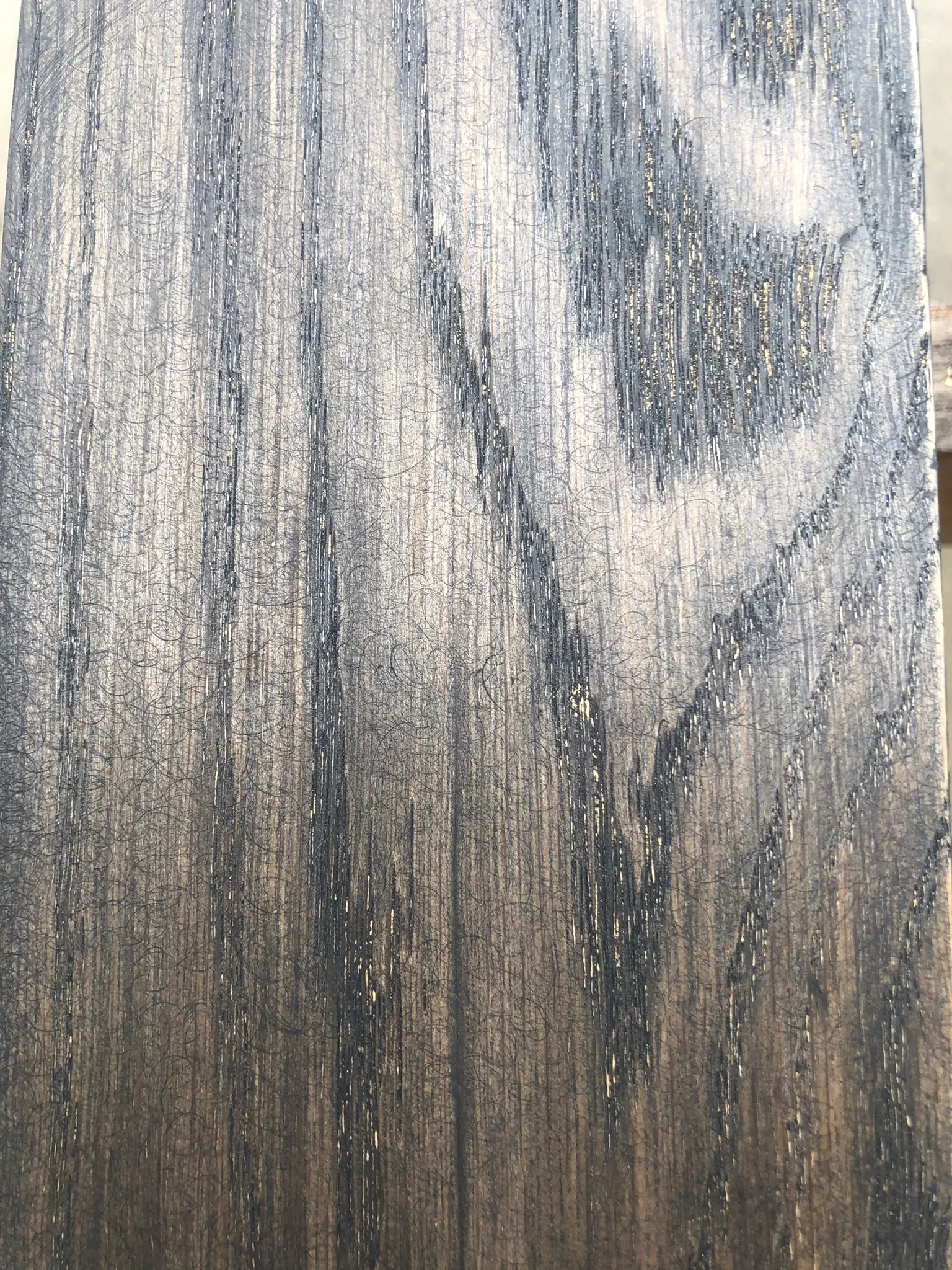
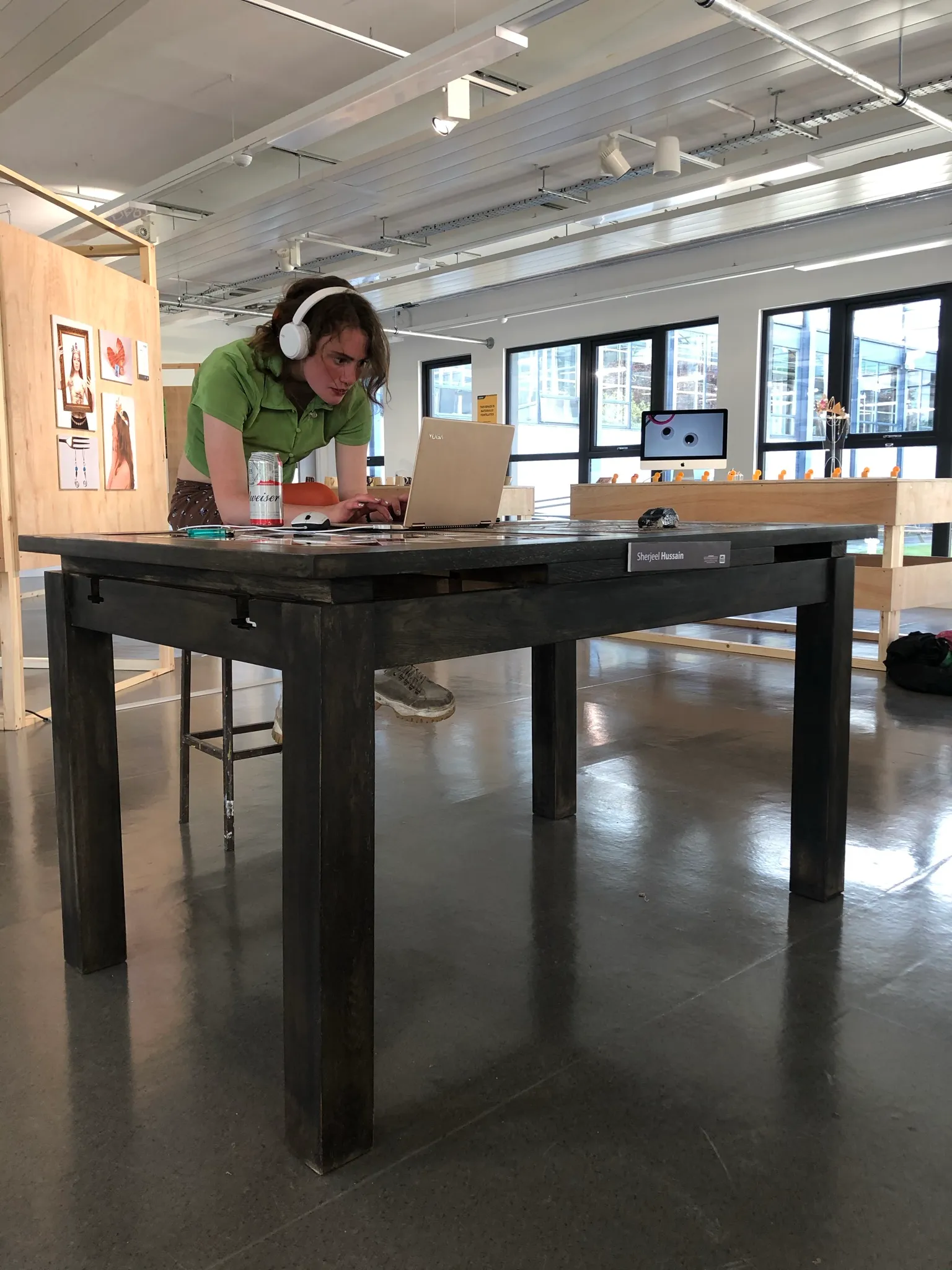
Eight layers of Indian ink built up and sanded back — applied like lacquer — followed by three coats of natural beeswax. No hazardous fumes, no synthetic sealants. The finish protects the wood and can be fully removed at end of life, keeping the cradle-to-cradle chain intact.
100+
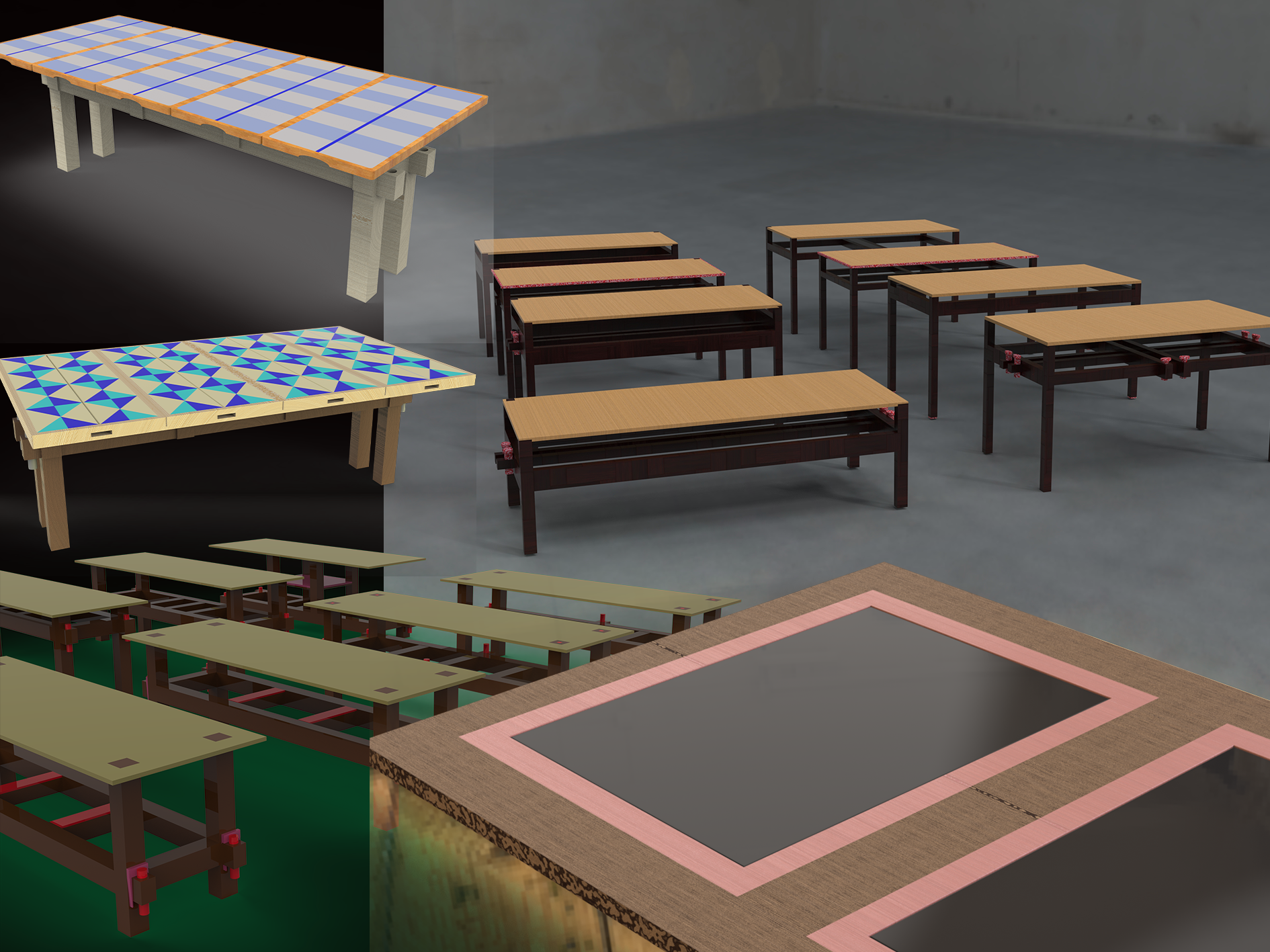
Rhino & Keyshot Iterations
16hrs
Sanding the Oak Frame
8×
Layers of Indian Ink
04 — Outcome
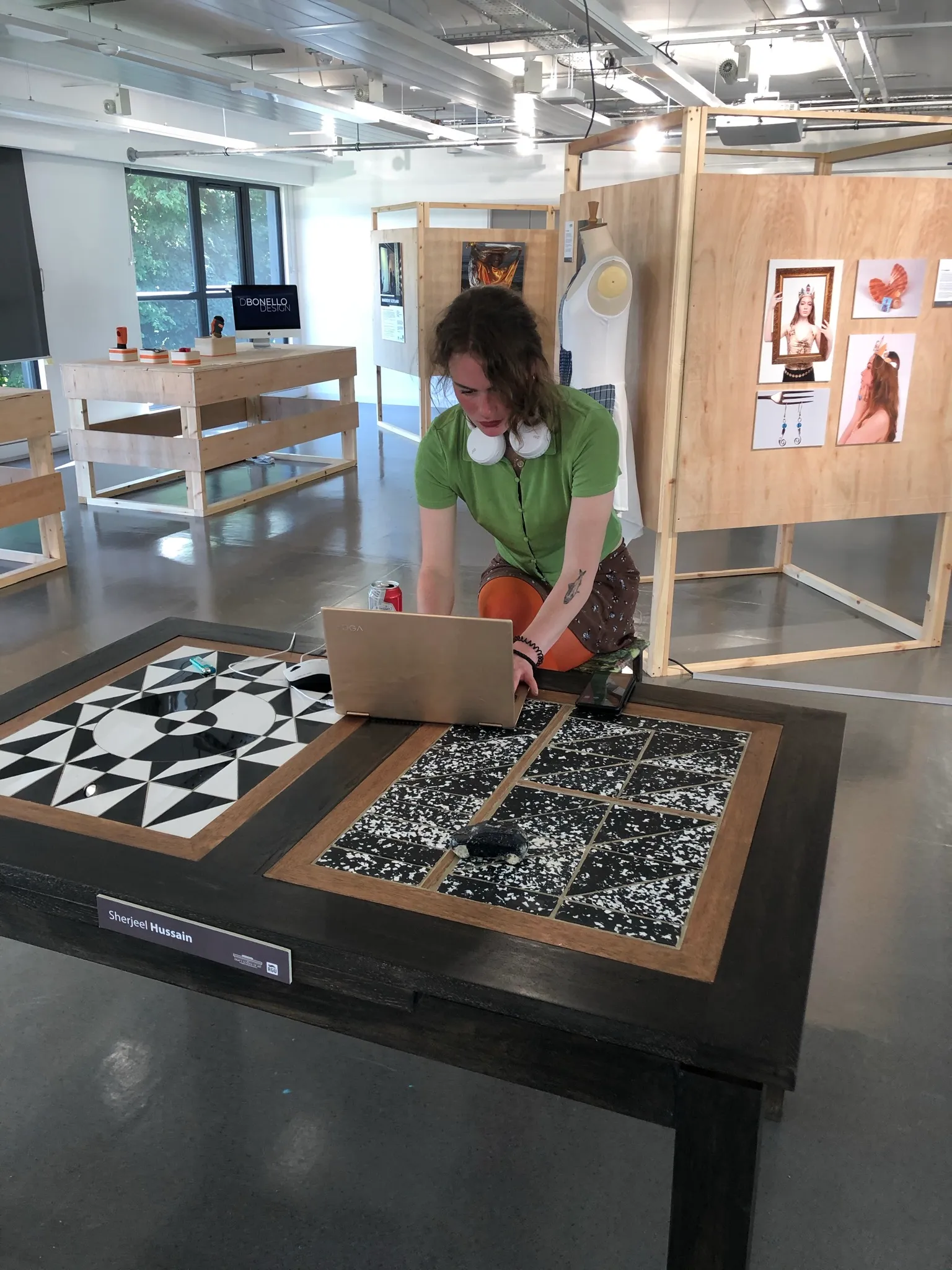
The finished prototype was shown at Gray's School of Art Degree Show in 2023 alongside a business concept for how CANTI could work as a product line — the take-back model for end-of-life panels, the batch production approach, the route to market.
CANTI 001 was always meant to be the proof of concept. The question it was answering was whether recycled plastic and sustainable finishing could sit alongside hardwood without the result reading as a compromise. The degree show was the test. The response confirmed it could.
The panels are designed to leave. The table is designed to stay.